What Should I Wear Today? A Practical Guide for Men
You don’t need to turn fashion into a hobby to look sharp and appropriate. Dressing well is about making reliable, repeatable choices from the clothes you already own.
Guide reviewed:
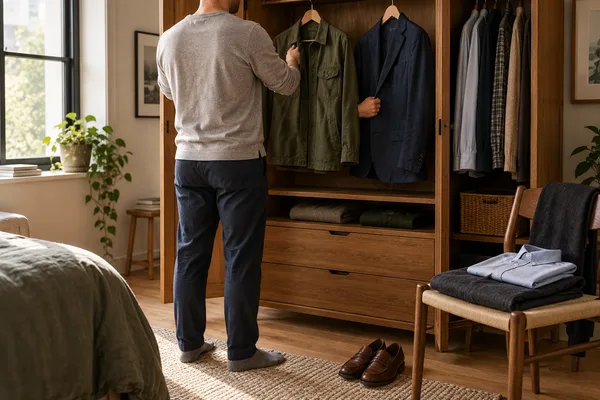
I built INDUTUS because I had this problem myself
I built INDUTUS because I had a very practical frustration: I wanted to dress appropriately for work, client meetings, dinners, and everyday life, but I didn’t want to spend my time studying fashion or planning combinations every morning.
Caring about how you look doesn’t mean you need to become a fashion enthusiast. Sometimes you just need a dependable answer to one practical question: What should I wear today?
1. Do you need to care about fashion to dress well?
No. Looking well-dressed and being interested in fashion are fundamentally different things.
Many men are not looking for avant-garde or experimental looks. What they actually want is to look appropriate, put-together, comfortable, and confident.
Fashion is an expressive hobby; getting dressed well for your life is a practical decision problem. When you separate the two, the daily pressure eases.
2. Why do I have plenty of clothes but still not know what to wear?
The problem is rarely a shortage of clothes. It is the mental friction of combining individual garments into an appropriate outfit.
Every morning, a complete outfit requires balancing four distinct variables: Occasion (where are you going?), Formality (how polished do you need to be?), Weather (what temperature and conditions must you handle?), and Compatibility (do these colors and textures work together?).
None of these questions is difficult on its own. The exhaustion comes from having to perform that multi-variable optimization every morning before your first cup of coffee.
3. Why doesn’t buying more clothes solve the problem?
When the bottleneck is decision-making, increasing options multiplies the number of potential combinations and increases friction.
“I have nothing to wear” usually doesn’t mean an empty closet. It means “I don’t know how to choose from what I already have.”
Buying more standalone items without an intentional system only adds more variables to an already crowded equation. If you want fewer, higher-leverage pieces, start with our capsule wardrobe essentials framework.
4. How should I decide what to wear? The 5-step framework
Follow a repeatable, top-down process rather than grabbing pieces at random.
- Start with the occasion
Where are you going today? A regular commute, a client presentation, a casual dinner, or traveling?
- Lock in the formality
How polished do you need to be? When in doubt, lean toward smart casual—it provides the widest safety margin.
- Check the weather forecast
What layer or fabric weight is required? Temperature and rain dictate your outerwear and footwear choices.
- Choose one anchor piece
Pick one foundational item first—typically your trousers or a staple shirt—and build around it.
- Check the complete outfit harmony
Ensure no single piece clashes in formality, texture, or tone. Clean, restrained, and intentional wins every time.
5. How can the same wardrobe work across different days?
The wardrobe does not need to change; the context changes the decision.
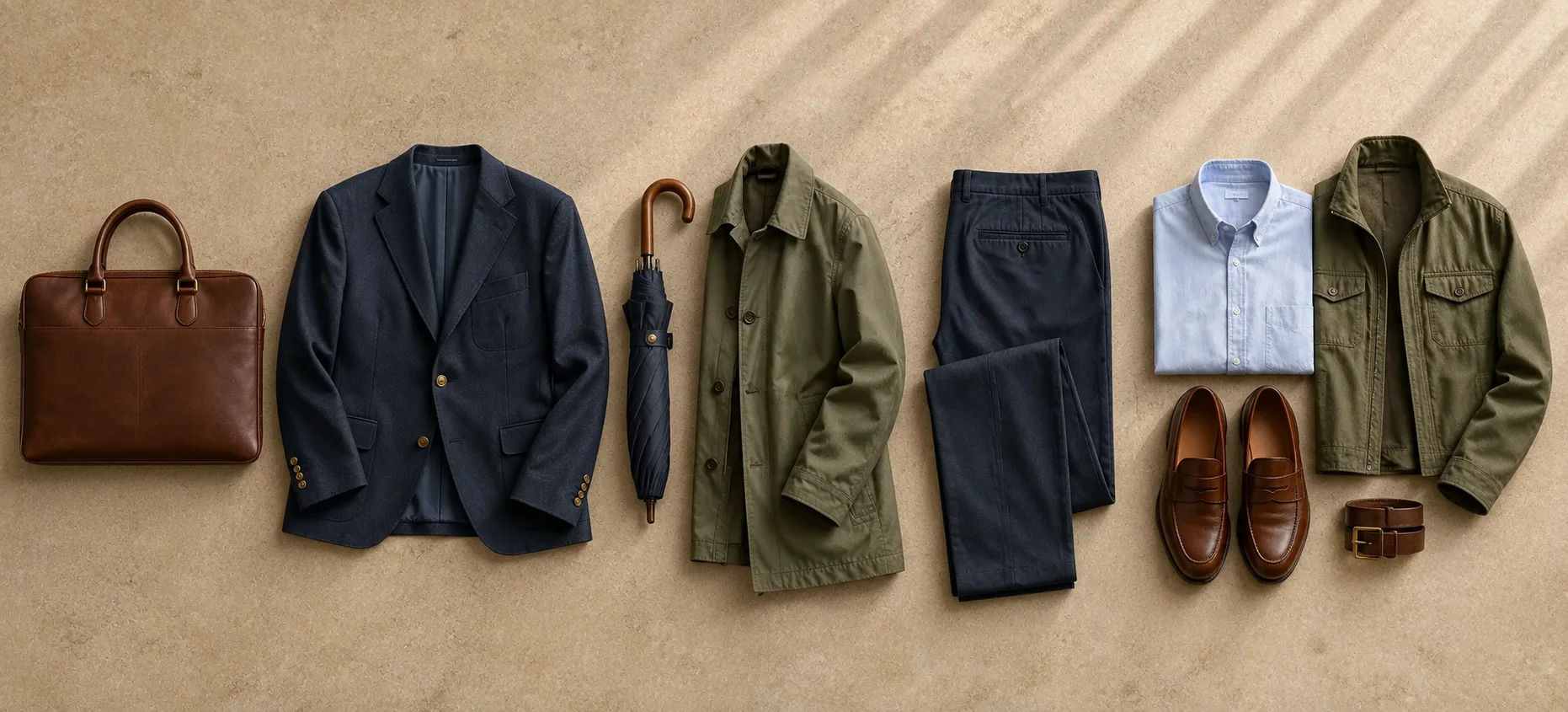
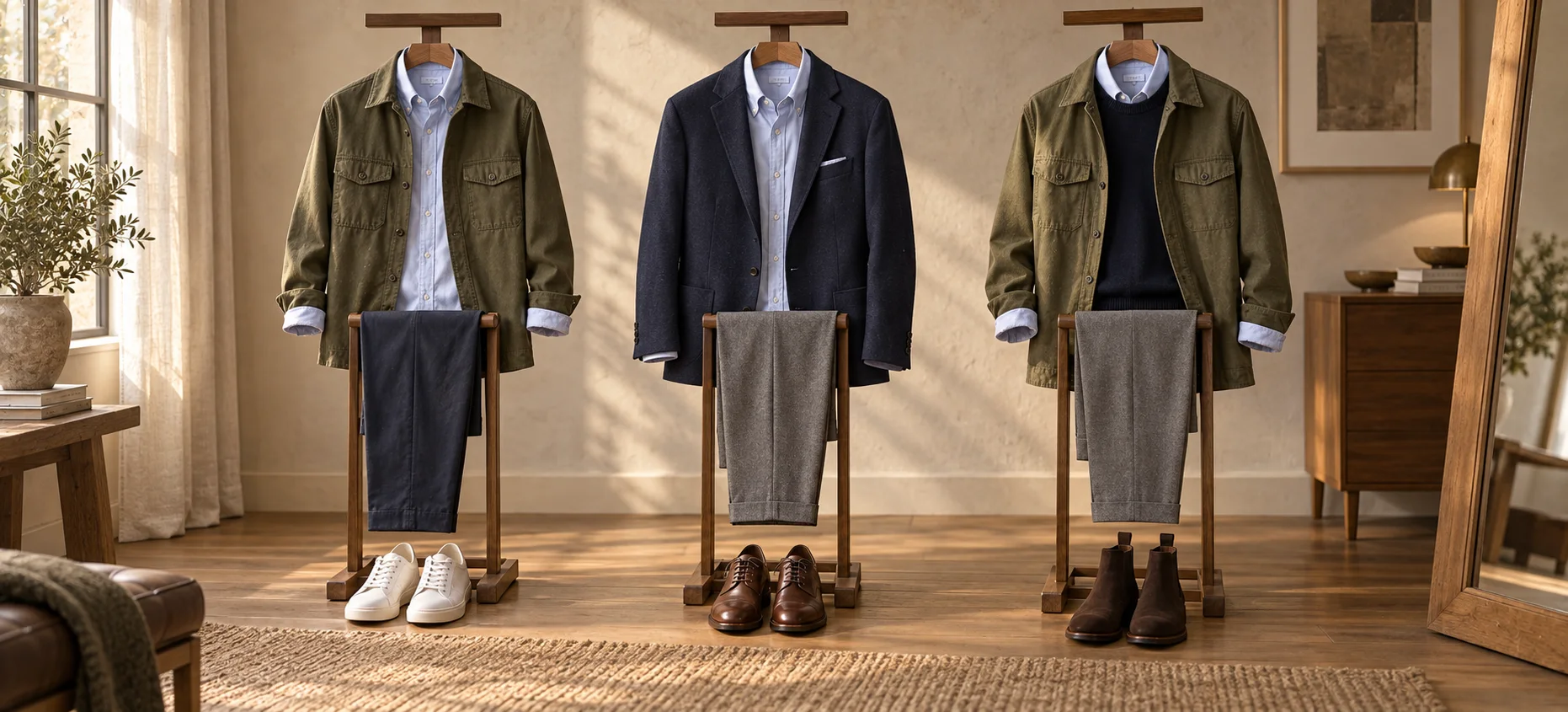
Consider a core set of 9 staple pieces: a white Oxford shirt, navy knit, unstructured blazer, olive overshirt, grey tailored trousers, dark chinos, clean white sneakers, brown derbies, and dark Chelsea boots.
On a regular office day: Oxford shirt + dark chinos + clean white sneakers (clean, sharp, relaxed).
For an executive client meeting: Same Oxford shirt + grey tailored trousers + navy blazer + brown derbies (elevated, professional, authoritative).
For a cool evening dinner: Same grey trousers + navy knit + olive overshirt + Chelsea boots (refined, textured, approachable).
You didn’t buy three new outfits. The same foundation adapted to three distinct situations.
6. Can AI decide what you should wear?
AI is effective here because outfit selection is a multi-variable constraint problem rather than a search for fashion inspiration.
In the past, you had to mentally catalog everything you own, interpret the occasion dress code, check the weather forecast, evaluate color harmony, and recall what you wore yesterday.
An AI outfit decision tool compresses this entire pipeline: Wardrobe + Occasion + Weather + Context → Complete, wearable outfit decision.
7. How is INDUTUS different from a general AI chatbot?
A general AI chatbot does not maintain INDUTUS’s dedicated structured wardrobe and outfit-decision state by default. INDUTUS is purpose-built around clothes you actually own.
Dedicated wardrobe state: Your clothes are digitized, categorized, and tagged with formality, seasonality, and color attributes.
Domain pipeline: Every outfit decision factors in your physical garments, occasion formality, real-time weather, and recent generated outfit history simultaneously.
Generated-outfit history and diversity policy: INDUTUS uses recent generated outfit history to reduce unnecessary repetition when suitable alternatives exist. Appropriateness still comes before novelty.
Privacy by design: Outfit generation never requires a body or face photo. Previews render on preset avatars, and your wardrobe is never published to a social feed.
8. Who is INDUTUS built for?
Clarity on who we serve—and who we do not.
It is for you if:
- You care about dressing well and looking put-together.
- You don’t want fashion to become another job or time-consuming hobby.
- You already own plenty of clothes and want clear answers from what you own.
- You prefer a dependable decision over browsing 50 mood-board inspirations.
- You want a private tool that remembers your wardrobe and recent generated outfit history.
It is NOT for you if:
- Fashion is a primary creative hobby and you love experimenting with avant-garde trends.
- You are primarily looking for shopping deals, affiliate discounts, or clothing marketplaces.
- You want a public social media feed to share and like closet photos.
Frequently Asked Questions
Why do I have lots of clothes but feel like I have nothing to wear?
The issue is decision overload, not closet volume. Having many standalone items without clear pairing formulas makes choosing harder, not easier.
Do I need to follow fashion trends to look well-dressed?
No. Dressing well depends on fit, cleanliness, appropriateness for the occasion, and cohesive neutrals. Trends are optional.
Should I buy more clothes if I struggle to make outfits?
Usually no. Adding more pieces without a cohesive core matrix multiplies the number of decisions. First audit and organize what you already own.
How should men dress for different occasions?
Anchor to the occasion’s formality standard first (casual, smart casual, business formal), then adjust layers for weather and temperature.
Can AI really choose an outfit for me?
Yes. Because clothing selection is a multi-variable optimization problem—matching owned pieces against occasion, weather, and color rules—AI can evaluate these variables together and return a concrete outfit decision.
How is INDUTUS different from asking a general AI chatbot?
A general AI chatbot does not maintain INDUTUS’s dedicated structured wardrobe and outfit-decision state by default. INDUTUS keeps structured wardrobe data, a weather and occasion pipeline, generated-outfit history, and a diversity policy that reduces unnecessary repetition when suitable alternatives exist.
Know what to wear without turning fashion into another job.
Add the clothes you already own, choose where you’re going, and let INDUTUS make the outfit decision.