Men’s Smart Casual: Outfits from Your Closet
Decide what to wear to work without buying new clothes. Grounded in formality rules, versatile formulas, and weather adjustments from your closet.
Guide reviewed:
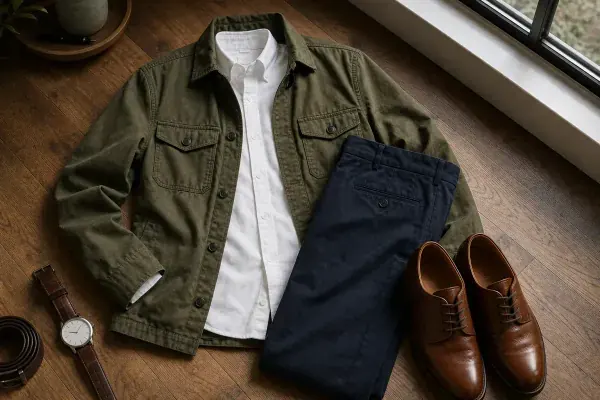
The real challenge is daily decision fatigue
When your closet is full but you still hesitate in the morning, the problem is constant micro-decisions: how formal is too formal, what the weather calls for, and which shoes match which trousers. Buying another shirt rarely solves this.
This guide gives you a dependable framework for weekday dressing. With core essentials — shirts, knitwear, chinos/trousers, clean dark denim, versatile overshirts, and clean shoes — you can put together sharp looks effortlessly.
1. Lock in formality first
Workplace dress codes and meeting expectations come first. Determine your required formality level before picking colors or styling details to ensure you fit the room perfectly.
Smart Casual vs. Business Casual: What’s the difference? Smart casual is relaxed yet polished, allowing tailored dark denim, knit polos, unstructured overshirts or blazers, and clean leather sneakers. Business casual is more structured, typically requiring dress shirts, tailored wool or cotton trousers, classic dress shoes (derbies or loafers), and structured jackets without jeans or sneakers.
Casual: Denim paired with a clean tee or fine knitwear; keep it relaxed and effortless.
Smart casual (daily office / hybrid): Collared shirt or fine-gauge knit; tailored chinos or clean dark denim; loafers or clean leather sneakers; optional unstructured blazer.
Business casual: Dress shirt, tailored trousers, classic leather shoes, and a tailored jacket.
Important presentation / client meeting: Elevate one notch — crisper lines, restrained palette, and polished footwear.
2. The 5-step outfit formula
Use a reliable formula to build your look in seconds without second-guessing:
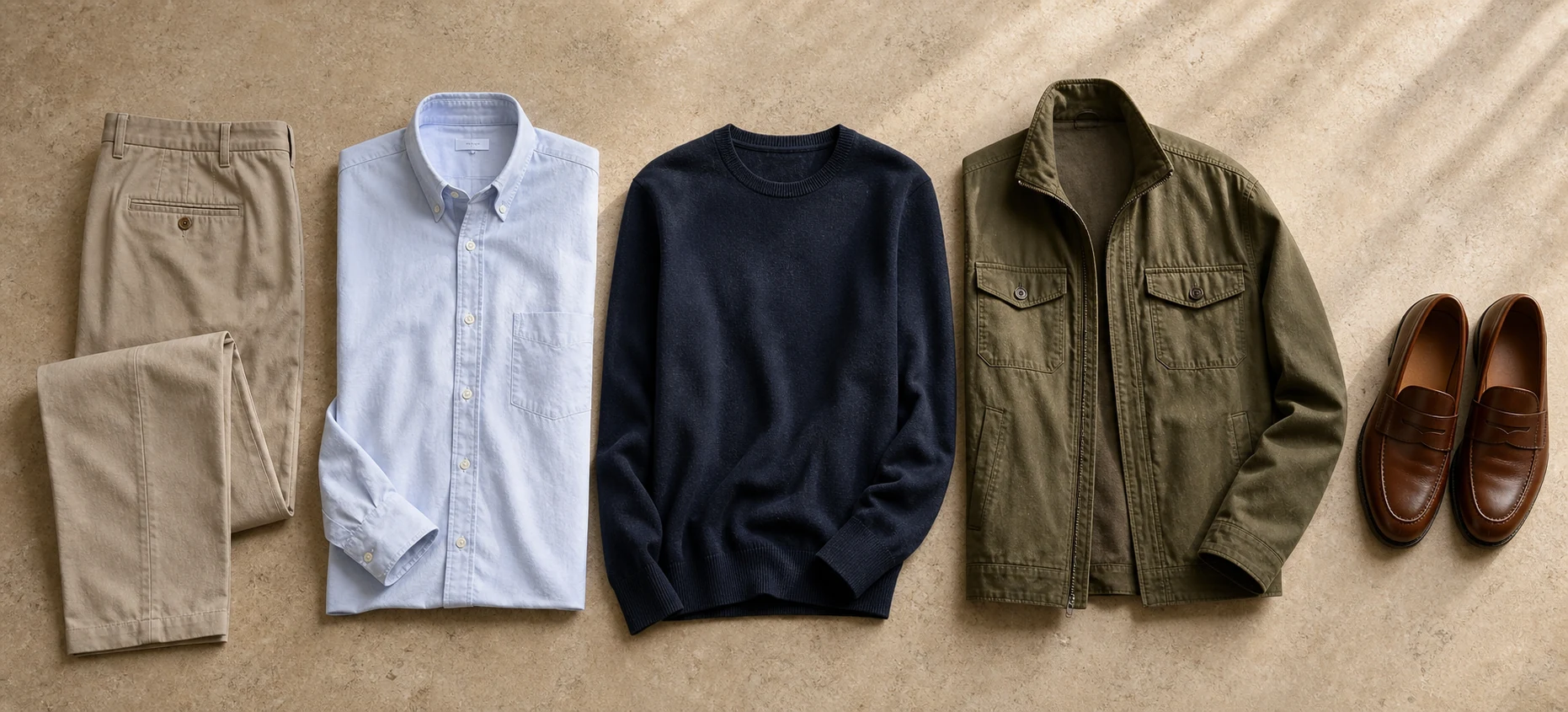
- Bottom foundation: Neutral trousers or clean dark denim (navy, charcoal, olive, stone, or black).
- Core top: Oxford cloth button-down, knit polo, merino crewneck, or lightweight rollneck.
- Outer layer (as needed): Unstructured blazer, cardigan, overshirt, or clean field jacket based on temperature.
- Footwear: Clean leather sneakers, loafers, derbies, or Chelsea boots matching the outfit’s formality.
- Finishing touch: Coordinate belt and leather tones; keep accessories purposeful and understated.
3. Layer according to the daily forecast
Weather changes fabrics and layering, not the required dress code. A rainy client meeting still requires sharp tailoring — simply add a sleek water-resistant mac coat and dark leather shoes.
Hot weather: Breathable linen-cotton shirts or knit polos with lightweight trousers. Cold mornings: Layer fine knitwear under a tailored wool overcoat. Wet weather: Darker trousers, water-resistant footwear, and a clean raincoat.
Check temperature swings and office AC before heading out, then add or remove a single layer without rethinking your entire look.
Common smart casual mistakes
- Mistaking smart casual for "anything goes" — the style still has clear bounds of polish and fit.
- Buying more clothes to solve morning hesitation. When combination rules are missing, more items just add clutter.
- Leaving footwear to the last minute; shoes immediately define whether an outfit reads professional or casual.
- Chasing styling trends that rely on impractical pieces. Focus on versatile staples that easily swap with what you own.
Ready-to-wear formulas (with easy swaps)
Standard office day · Mild weather
Navy chinos + light-blue oxford shirt + brown leather sneakers or loafers. Add an unstructured navy blazer if meetings arise.
No chinos? Swap in clean dark denim. No oxford shirt? Wear a fine navy or charcoal knit over a clean crew-neck tee.
Client meeting · One notch up
Charcoal or mid-grey trousers + crisp white button-down + dark derbies or loafers + unstructured navy blazer.
No blazer? Choose your sharpest collared shirt, button the cuffs, and wear polished leather shoes for an intentional, tailored look.
Warm commute, air-conditioned office
Stone or olive chinos + breathable short-sleeve shirt or knit polo + minimal leather sneakers. Keep a light overshirt or cardigan at your desk.
No knit polo? Wear an untucked oxford with neatly rolled sleeves upon arrival.
Chilly morning · Smart casual
Dark wool trousers + dress shirt + fine merino knit + tailored wool overcoat. Pair with weather-ready leather boots or dark sneakers.
No overcoat? Layer a clean, structured dark jacket over your collared shirt to stay warm without looking overly sporty.
Rainy forecast · Hybrid workday
Dark chinos or dark denim + mid-tone oxford shirt + tailored water-resistant jacket + dark leather shoes.
Keep your base outfit classic and let your dark, water-resistant outer layer do the work against the rain.
Frequently Asked Questions
What is the smart casual dress code for men?
Smart casual sits between relaxed casual wear and traditional business casual. It pairs tailored, structured staples (like chinos or an unstructured blazer) with casual, comfortable pieces (like a merino knit or clean white leather sneakers).
Can you wear jeans for smart casual?
Yes, provided they are clean, dark (indigo, charcoal, or black), slim or straight-cut, and completely free of fading, distressing, or rips. Pair them with a collared shirt or tailored jacket to maintain balance.
What shoes work best for smart casual?
Minimalist leather sneakers (white, brown, or black), leather or suede loafers, Chelsea boots, and clean derbies are the most versatile footwear choices.
How do I build a smart casual wardrobe without buying new clothes?
Start by auditing your core neutrals: 2 pairs of versatile trousers (navy chinos, dark denim), 3 collared shirts or knits, and 1 versatile outer layer (unstructured blazer or overshirt). For a complete 20-piece breakdown, explore our capsule wardrobe essentials guide. Men’s Capsule Wardrobe Essentials Guide →
Let AI handle your daily styling decisions
Rather than planning outfits manually every morning, INDUTUS creates customized, wearable combinations directly from your closet, matched to your schedule and local weather. Your wardrobe stays 100% private, with try-on previews shown on a preset avatar — no personal body or face photos required.